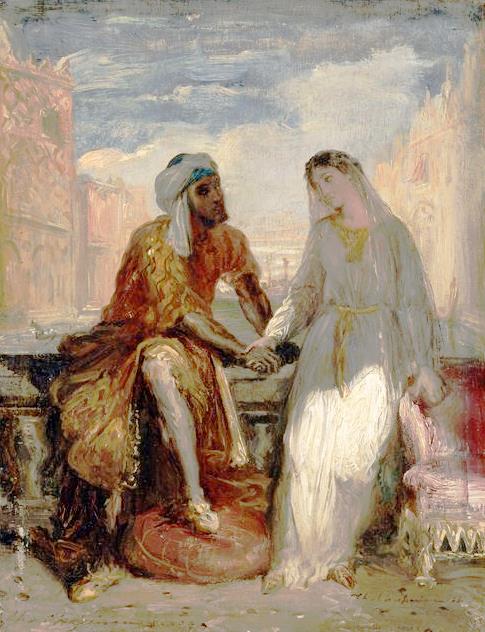
Shakespeare's Othello is a tightly focused tragedy. Unlike some of his plays, it has no sprawling subplots: almost everything turns on one man, Iago, slowly poisoning the mind of another, Othello. That focus makes the themes easier to trace, but it also means examiners expect you to discuss them with real precision. This guide outlines the key themes and gives you a way to revise each one.
A quick reminder of the plot
Othello, a respected Moorish general in the service of Venice, secretly marries Desdemona, the daughter of a Venetian senator. Iago, his ensign, resents Othello for promoting Cassio above him and sets out to destroy him. After the action moves to Cyprus, Iago manipulates Othello into believing that Desdemona is having an affair with Cassio, using Desdemona's lost handkerchief as "proof". Consumed by jealousy, Othello kills Desdemona. When Emilia, Iago's wife, reveals the truth, Othello takes his own life.
Jealousy
Jealousy is the engine of the tragedy. Iago himself warns Othello against jealousy, calling it a "green-eyed monster", even as he deliberately provokes it. It is worth noticing that jealousy is not only Othello's problem. Iago is also driven by envy and resentment: of Cassio's promotion, of Othello's status, and by suspicions about his own wife.
For revision: trace how quickly Othello moves from trust to certainty. Ask what in his situation and character makes him vulnerable to Iago's suggestions.
Appearance and reality
The play is full of characters who are not what they seem. Iago is repeatedly called "honest", which becomes one of the play's sharpest ironies. Desdemona is entirely faithful, yet she is made to appear guilty. Othello judges by what he thinks he sees, and Iago is a master at staging what others see.
For revision: collect moments where a character's reputation or appearance is at odds with the truth. Think about the role of "ocular proof" and the handkerchief, a small object made to carry enormous meaning.
Race and otherness
Othello is an outsider in Venetian society. He is valued for his military skill, yet other characters, especially Iago, Roderigo and Brabantio, use racist language about him, particularly at the start of the play. Brabantio cannot believe his daughter would marry Othello without witchcraft.
How far Othello absorbs the way Venice sees him is one of the play's most debated questions. Some readers argue that his insecurity as an outsider is part of what Iago exploits. Be careful and thoughtful here: discuss how the play presents prejudice, rather than suggesting that Othello's tragedy is caused by who he is.
For revision: compare how Othello is spoken of when he is absent with how he speaks and acts in the opening acts, when he is calm and dignified.
Reputation and honour
Reputation matters enormously in this world. Cassio is devastated to lose his reputation after his drunken brawl, which Iago arranges. Othello's sense of honour is bound up with his marriage. Iago, ironically, dismisses reputation in one conversation and exploits its importance in the next.
For revision: note how each major male character responds to a threat to his reputation, and how those responses drive the plot.
Gender and power
Desdemona, Emilia and Bianca are all, in different ways, judged and controlled by the men around them. Desdemona shows courage in choosing her husband and defending her marriage before the Senate, yet she is powerless against Othello's suspicion. Emilia's speech about how husbands treat wives, and her final defiance of Iago when she exposes him, are often seen as among the play's boldest moments.
For revision: consider how each woman is viewed by the men and how each responds. Emilia is a particularly rich character to write about because she changes so dramatically.
Manipulation and language
Iago's weapon is language. He rarely tells outright lies at first; he hints, hesitates and lets Othello's imagination do the work. Othello's own language also changes as the play goes on, from the measured eloquence of his early speeches to fragmented, disturbed speech when Iago's poison takes hold.
For revision: pick two short passages, one early and one late, and compare Othello's language. This is an excellent topic for an essay paragraph.
How to revise the themes
- Make a one-page summary for each theme with three or four key moments.
- For each moment, note a few words of quotation you can remember, kept short.
- Practise linking themes, for example, jealousy and appearance versus reality.
- Write timed paragraphs that answer a specific question, rather than general theme essays.
Revision tip: examiners reward an argument about the play, not a list of everything that happens.
The essay skills you use for poetry transfer directly to Othello. How to Write a Poetry Essay for IEB English explains how to build an argument, How to Quote Effectively in Poetry Answers applies just as well to Shakespeare, and Discuss, Explain, Comment: Decoding Question Verbs will help you read every question carefully. If you have studied the dramatic monologue, you will find The Dramatic Monologue: Ulysses and Stealing a useful way to think about Iago's soliloquies too.
Members can find full Othello video lessons and PowerPoints through the membership options.
Go Further with the Othello Course
Video lessons, PowerPoints and essay guidance for every part of Othello, taught by Kate.