If there is one theme that runs through almost every poem you study in matric, it is time. Poets have always written about the fact that we age, that love and power fade, and that every life ends. That sounds gloomy, but the prescribed poems respond to it in surprisingly different ways: some defy time, some accept it with grace, and some look it straight in the eye and shudder. Grouping poems by their attitude to time is a powerful way to revise, because it gives you ready-made comparisons for essay questions.
Three attitudes to time
Before looking at individual poems, it helps to have a simple framework:
- Defiance: the speaker refuses to let time rule them.
- Acceptance: the speaker comes to terms with loss and death, often with generosity or calm.
- Fear or dread: the speaker sees time as a threat that strips away beauty, power or identity.
Many poems mix these attitudes, and the shift from one to another is often where the most interesting analysis lies.
Defying time
John Donne's The Sun Rising is the boldest example. The speaker scolds the sun, the very clock of the universe, for waking him and his lover. He insists that love knows no seasons and that hours, days and months are merely "the rags of time". The metaphor is wonderfully dismissive: time is reduced to scraps of cloth, while love is whole and complete. The defiance is playful and exaggerated, of course, but it makes a serious point about how love can make time feel irrelevant.
Tennyson's Ulysses defies time differently. The old hero knows he is near the end, admitting that "Death closes all", but he refuses to wait quietly for it. He plans to "sail beyond the sunset", a metaphor that suggests pushing past the limits of life itself. His defiance is not a denial of death but a decision to keep living fully until it comes.
Accepting time
Christina Rossetti's Remember begins as a plea and ends as an act of acceptance. The speaker asks her beloved to remember her when she has "gone away", a gentle euphemism for death, and describes death as "the silent land". Then, at the turn of the sonnet, she changes her mind: it would be "Better by far" for him to forget and smile than to remember and be sad. She accepts not only her own death but the possibility of being forgotten.
The Petrarchan sonnet form matters here. The octave holds the plea and the sestet holds the release, so the poem's structure enacts the speaker's growing acceptance. This is a perfect example of form and meaning working together, something discussed in Form and Structure: Sonnets, Free Verse and More.
Finuala Dowling's For Oom Piet offers a quieter, more personal kind of acceptance. Paying tribute to an older figure, it reflects on what is lost as people age and pass on, while honouring the value of an ordinary life. Its warmth suggests that memory and respect are our best answers to the passage of time.
Fearing time
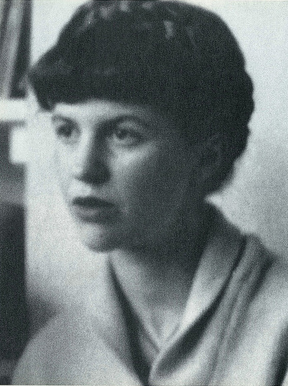
Sylvia Plath's Mirror is the most unsettling poem in this group. The mirror claims to be "silver and exact", reflecting the truth without judgement. A woman returns to it again and again, searching for herself and growing distressed at what she sees. By the end, the mirror has become a lake, and from its depths an old woman rises towards her like a "terrible fish". Ageing is not gentle here; it is monstrous and relentless, and the mirror's cold honesty makes it worse.
Shelley's Ozymandias of Egypt shows time on a much larger scale. A king who believed his works would last forever is reduced to a broken statue in an empty desert. Here time is less frightening than humbling: it destroys pride and power as surely as it destroys youth.
Building comparisons for the exam
Because these poems share a theme, you can pair them in many ways. Some strong combinations:
- Remember and Mirror: two women facing time, one with generosity and one with fear.
- The Sun Rising and Ulysses: two forms of defiance, one through love and one through adventure.
- Ozymandias and Ulysses: two kings and two very different ideas of legacy, discussed in Power and Pride: From Ozymandias to Ulysses.
- Remember and For Oom Piet: memory as a response to loss.
Exam tip: do not just say a poem is "about death". Say what attitude it takes to death, and show how a specific image or structural choice creates that attitude.
Writing about time without being vague
Time and mortality are big, abstract subjects, so it is easy to drift into generalisations. Keep your writing precise:
- Anchor every point in a specific image: the rags, the sunset, the silent land, the fish, the sand.
- Name the device and explain its effect. The euphemism in Remember softens death; the simile in Mirror makes ageing grotesque.
- Track change. Ask where the speaker begins and where they end up.
- Use tone words carefully: defiant, resigned, tender, bitter, wistful, horrified. Our guide to tone versus mood has more options.
When you revise this way, you are not just learning poems one by one; you are building a web of connections that will serve you in any comparison question. The member videos on each of these poems go deeper into the language and structure (see the options).
Go Further with Video Lessons
Step-by-step video analyses and exam-style PowerPoints for every prescribed poem and setwork.